Our Members
The National Academy of Medicine has more than 2,400 members elected in recognition of outstanding professional achievement. Members contribute to the work of the NAM and the National Academies through volunteer service on leadership and advisory bodies and programmatic working groups. The NAM elects no more than 90 members from the United States and 10 international members annually.
Pioneers of Progress
Congratulations to Our Nobel Prize Winners
More than 80 members of the NAM are recipients of Nobel Prizes in physiology or medicine; chemistry; economics; physics, and peace. In 2023, Katalin Karikó (Class of 2022) and Drew Weissman (Class of 2022) received the Nobel Prize in Physiology or Medicine for their discoveries concerning nucleoside base modifications that enabled the development of effective mRNA vaccines against COVID-19.
Volunteerism
Member Awards for Service to the NAM
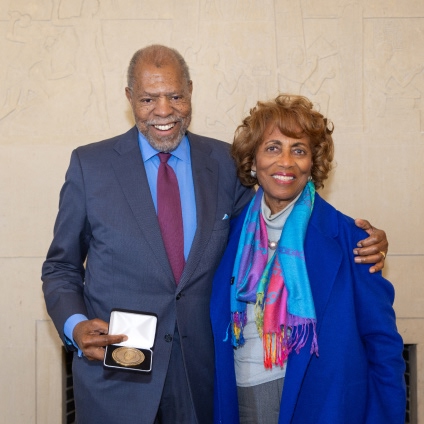
Each year, the NAM issues three awards to members in recognition of outstanding contributions to the work of the Academy. The Walsh McDermott Medal recognizes distinguished service over an extended period of time; the Adam Yarmolinsky Medal recognizes members from disciplines outside the health and medical sciences; and the David Rall Medal recognizes exemplary leadership as an activity chair. Nominations open each July.
At a Glance
Members by the Numbers
2,400+
Members
43
Major fields of biomedical science, health, and medicine
41
Countries
NAM Officers and Council
The Council is the NAM’s governing and oversight body. Councilors are elected by NAM members.

Victor J. Dzau, MD, is the President of the National Academy of Medicine (NAM), formerly the Institute of Medicine (IOM). In addition, he serves as Vice Chair of the National Research Council. Dr. Dzau is Chancellor Emeritus and James B. Duke Distinguished Professor of Medicine at Duke University and the past President and CEO of the Duke University Health System. Previously, Dr. Dzau was the Hersey Professor of Theory and Practice of Medicine and Chairman of Medicine at Harvard Medical School’s Brigham and Women’s Hospital, as well as Bloomfield Professor and Chairman of the Department of Medicine at Stanford University.
Dr. Dzau is an internationally acclaimed physician scientist and leader whose work has improved health and medicine in the United States and globally. His seminal work in cardiovascular medicine and genetics laid the foundation for the development of the class of lifesaving drugs known as ACE inhibitors, used globally to treat hypertension and heart failure. Dr. Dzau pioneered gene therapy for vascular disease and was the first to introduce DNA decoy molecules in humans in vivo. His pioneering research in cardiac regeneration led to the Paracrine Hypothesis of stem cell action and his recent strategy of direct cardiac reprogramming using microRNA. He maintains an active NIH-funded research laboratory.
Dr. Dzau is a leader in health and heath policy. At the NAM, he has led important initiatives such as Vital Directions for Health and Health Care, the Action Collaborative on Countering the US Opioid Epidemic, and the Action Collaborative on Clinician Well-Being and Resilience. Under his tenure, the NAM has advanced efforts to improve health equity and address racism throughout its programmatic activities, especially the Culture of Health Program. Most recently, the NAM launched a Grand Challenge in Climate Change and Human Health & Equity to reverse the negative effects of climate change on health and social equity by activating the entire biomedical community, communicating and educating the public about climate change and health, driving changes through research, innovation and policy, and leading bold action to decarbonize the health care sector.
As a global health leader, he helped design and launch the National Academies initiatives on Global Health Risk Framework; Global Health and Future Role of the US; Crossing the Global Quality Chasm and Human Genome Editing. The NAM Global Grand Challenge for Healthy Longevity represents his vision to inspire across disciplines and sectors to coalesce around a shared priority and audacious goal to advance health.
He has led the NAM’s response to COVID-19, which includes numerous committees, reports, consultations and communication on a range of issues including public health, vaccine allocation, health equity and mental health. He has worked tirelessly to engage with the global response to COVD-19 by providing leadership as a member of the Global Preparedness Monitoring Board, co-chair of the G20 Scientific Expert Panel on Global Health Security, Advisor to the G20 High Level Independent Panel on Financing and a principal of the ACT-Accelerator which includes COVAX, the global collaboration for accelerating the development, manufacture and equitable distribution of COVID-19 vaccines.
He is active in advising science and health in US and globally. He has served as a member of the Advisory Committee to the Director of the National Institutes of Health (NIH), chaired the NIH Cardiovascular Disease Advisory Committee and NHLBI Cardiovascular Progenitor Cell Biology Consortium. Currently, he chairs the Cardiovascular Progenitor Cell Translational Consortium. He is a member of the Health and Biomedical Sciences International Advisory Council of Singapore, as well as a board member of the Imperial College Health Partners, UK and the Gairdner Foundation. He chairs the International Scientific Advisory Committee of the Qatar Precision Medicine Institute, the Scientific Boards of the Peter Munk Cardiac Center, University of Toronto and Institute of Cardiovascular and Medical Sciences, University of Glasgow. He served on the Board of Health Governors of the World Economic Forum and chairs its Global Futures Council on Healthy Longevity.
Among his many honors and recognitions are the Max Delbreck Medal from Charite, Humboldt and Max Planck, Germany, the Distinguished Scientist Award from the American Heart Association, Ellis Island Medal of Honor, and the Henry Freisen International Prize. In 2019, he was named an Honorary Citizen of Singapore- the highest level of honor bestowed to a foreign citizen conferred by the President of Singapore. He has been elected to the National Academy of Medicine, the American Academy of Arts and Sciences, the European Academy of Sciences and Arts, UK Academy of Medical Sciences, the Japan Academy, Mexican Academy of Medicine, Chinese Academy of Engineering and Academia Sinica. He has received 16 honorary doctorates.


Karen DeSalvo, MD, MPH, is a dedicated global health leader who has committed her career to improving health outcomes by using technology, medicine, and public health. Her work focuses on addressing the social determinants of health. In her recent capacity as Google’s Chief Health Officer, Dr. DeSalvo spearheaded the team of health professionals dedicated to harnessing Google’s tools and technology to help everyone, everywhere, live a longer, healthier life. She was instrumental in integrating health-focused applications into Google’s diverse product ecosystem and provided medical leadership for employee health and safety initiatives. Before Google, Dr. DeSalvo held significant roles in the U.S. government, including National Coordinator for Health Information Technology and acting Assistant Secretary for Health. She was also the Health Commissioner in New Orleans following Hurricane Katrina, where she helped lead public health recovery efforts. She served as a Professor and Vice Dean for Community Affairs and Health Policy at Tulane School of Medicine. Dr. DeSalvo currently sits on the Boards of Directors for Welltower and CityBlock Health and is a member of the Council of the National Academy of Medicine. She is a member of the WHO Commission on Social Connection. She co-founded the National Alliance for the Social Determinants of Health (NASDOH). Her past roles include serving on the Medicare Payment Advisory Commission and the Humana Board of Directors, as well as being President of the Society of General Internal Medicine. She holds an MD and MPH from Tulane University and a master’s in clinical epidemiology from Harvard School of Public Health. Her contributions have been recognized by Modern Healthcare, which has repeatedly named her among the “100 most influential people in health,” and by Time Magazine, which included her as a “Titan” on their “Time 100 in Healthcare” list.


Member News